
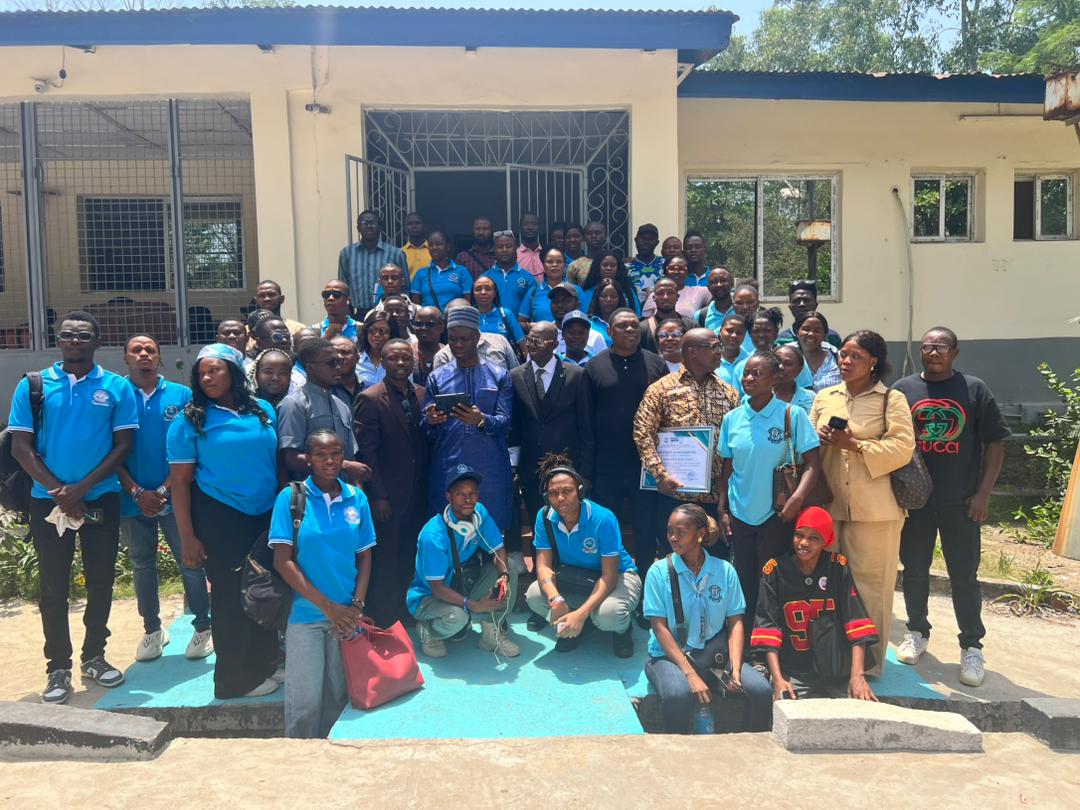
The Department of Procurement, Logistics and Supply Chain Management at the University of Makeni (UniMak) on Saturday hosted a high-level forum at the university auditorium to commemorate World Procurement Day, bringing together key stakeholders to discuss the future of procurement in a rapidly evolving global landscape.
The event, held under the theme “Adapting to AI-Driven E-Procurement and Sustainable Practices in a Transforming Global Landscape,” attracted students, academics, policymakers, and professionals, all focused on exploring innovative and sustainable approaches to procurement.
Speaking on sustainable procurement, Senior Lecturer Joseph M. Komeh emphasized the need for procurement practitioners—especially young professionals—to prioritize sustainability credentials during the evaluation of bids. He noted that procurement decisions must consider environmental protection, social well-being, and economic growth.
According to him, integrating sustainability into procurement processes ensures that projects do not harm the environment or communities, while also contributing positively to national development.
In a presentation on digital transformation, Dr. Mohamed Baba Turay highlighted the importance of Electronic Government Procurement (E-GP) systems in enhancing transparency and accountability. He explained that such systems reduce human interference, improve confidentiality in bid submissions, and minimize corruption risks associated with manual procurement methods.
Dr. Turay further outlined how E-GP platforms streamline procurement processes, improve efficiency, and build public trust in government systems.
Also addressing the forum, Foday J. Konneh, Chief Executive Officer of the National Public Procurement Authority (NPPA), spoke on ongoing reforms within Sierra Leone’s procurement sector. He provided updates on the rollout of the E-GP system across selected Ministries, Departments, and Agencies (MDAs), noting that key modules such as supplier registration, annual procurement planning, and bid submission are currently being piloted.
He stated that these digital tools are expected to improve competition, enhance transparency, and strengthen accountability in public procurement.
Konneh also discussed the significance of the Methodology for Assessing Procurement Systems (MAPS), describing it as a vital tool for identifying strengths and weaknesses within the country’s procurement framework. He noted that the findings from the assessment would guide future reforms, particularly in areas such as digitalization, capacity building, and regulatory enforcement.
Participants engaged in discussions on the role of artificial intelligence in procurement and the need for continuous professional development. There was a shared consensus on the importance of embracing innovation while upholding ethical standards and sustainability principles.
The event concluded with a call for students and practitioners to position themselves as forward-thinking professionals capable of navigating digital procurement systems and contributing to sustainable national development.
The World Procurement Day celebration at UniMak served as a platform for knowledge sharing and reflection, highlighting the critical role of procurement in promoting transparency, efficiency, and economic growth in Sierra Leone.
